
Showing posts with label OLED TVs. Show all posts

Friday, 6 March 2020

Ultra HD, OLED, Dolby, HDR... Decipher TV Datasheets Like A Pro

Ultra HD, OLED, Dolby, HDR... Decipher TV Datasheets Like A Pro

Ultra_HD_OLED_Dolby_HDR

     Multiplication of logos, incomprehensible technical details, obscure marketing discourse... It's not easy to get an idea of the quality of a television set. I give you a few keys to make sure you don't make a mistake.

     Buying a TV, what a puzzle! Online shopping sites are full of information that is unclear to the uninitiated.

      On the other hand, in stores, the technical data sheets are often too sparse and the salespeople... are not always giving good advice. 


     It's not easy, therefore, to understand everything and not be fooled. I'll help you find your way around logos and jargon in order to identify the main criteria to favor and the pitfalls to avoid.

 Brightness and contrast: the basics

     We will not dwell on the indications of brightness and contrast, as their interpretation is so obvious. 

     Simple: the higher the values are, the more you'll be amazed... at least in theory.

     Because in this war of numbers, the data looks more like marketing communication than a real benefit to the customer. 


     In fact, tests show that it is not always the brightest TVs that display the best image quality.

     Fortunately, some certifications such as Ultra HD Premium set specifications that have the merit of establishing a good foundation for consumers. We'll come back to this later. 

     Be aware, however, that brightness is expressed in candela per square meter or in nits (it's the same thing). 


     Contrast is expressed as a ratio ("1200:1", for example). Two numbers that represent the maximum difference between the brightness of a white pixel and a black pixel. 

Full HD or Ultra HD?

Full_ HD_Ultra_HD

     With the exception of some small TVs, which remain in 720p definition, the majority of screens now display Full HD and Ultra HD


     There's no need to go into too much detail on the first, which is well known to everyone and has 1920 x 1080 pixels (or about 2 million pixels).

     For ultra HD, the definition is multiplied by two, which gives 3840 columns by 2160 lines for a total of 8.3 million pixels. 

     It should also be noted that ultra high definition is also improperly called 4K.

      Abusively, because there is a real difference between UHD and 4K. In this case, 4K displays 4096 x 2160 pixels, a 1.85:1 aspect ratio used for cinema broadcasting. But it is not used on TVs. 


     On the other hand, real 4K products can be found in high-end projectors, for example from Sony or LG.

     Another abuse of language: do not confuse image definition and resolution. 

     Resolution is expressed in pixels per inch (PPI) and corresponds to a density of pixels on the panel. The higher the value, the more accurate the image will be. 

     In other words, the larger your Ultra HD screen is, the less resolution it will have since the definition remains the same from one model to another.

LCD, OLED or QLED or Nano cell?

Tv-qled-who-sells-better-than-the-models-oled

     TV manufacturers currently rely on two main types of panels, namely LCD (liquid crystal display) and OLED (organic light-emitting diodes). 

The first is still the most common because of its lower cost. 

     Now very well mastered by manufacturers and mass-produced, this technology makes it possible to offer affordable TVs, even on very large Ultra HD panels.

     LCD requires a light source arranged in the form of ramps on the sides of the TV set. 

     The advantage: manufacturers can multiply the light sources and thus create particularly luminous tiles. 


     Disadvantages: the depth of the blacks sometimes leaves something to be desired and a luminous halo effect can be seen around subjects or objects.

     A phenomenon that is not seen on OLED panels. Since OLED panels are self-emissive, each pixel diffuses its own light. 

As a result, OLED panels have an "infinite" contrast ratio. 

     This materializes in use by sublime colors and absolute blacks, which is bluffing when you look at content in the dark... On the other side of the coin, OLED panels are a little less luminous. 

     And if all OLED TVs are not the same, let's point out that if you buy a Sony TV (read our 65AG9 test), Panasonic (read our 65GZ2000 test), or Philips (read our Philips OLED854 test), it is indeed LG that manufactures the panel. 


     The difference in quality will then be made on the processor processing and the settings specific to each manufacturer.

Lighting: LED, Edge LED, Full LED or mini-LED?

     The way a tile is illuminated can very clearly vary its rendering. Backlighting also has its own specificities and a series of competing technologies.

     In all cases, the light source is composed of LEDs of varying sizes and organized in different ways at the back of the panel. 

     At the bottom of the basket are the models with integrated backlighting called Edge (or Edge LED). In this case, the (white) LED strips are installed on the sides of the slab, which sometimes causes light leakage. 

     When they are placed at the top and bottom of the screen, we can also see that the black stripes of a film tend to turn grey.

     In the higher TV ranges, manufacturers are competing with so-called "zone" backlighting technologies, called Micro Dimming, Premium, Nano LED or even Local Dimming and Full Local Dimming. 

     Here, the LEDs are illuminated in zones behind the panel. The electronics can then vary the light intensity of these zones to produce better contrasts. 

     The indication of the presence of such a tile is already a favorable argument for the TV set. Unfortunately, very few manufacturers communicate on the number of integrated light zones. 

     However, the more light zones there are, the better the picture quality will be. As an example, one of the most ambitious televisions of this year 2020, the Samsung Q950T announces Full Local Dimming lighting over 520 zones. 

     The future of lighting technology lies in the miniaturization of LEDs. 

     In this game, two technologies are facing each other: the micro-LED dear to Samsung and its wall, "The Wall" and the mini-LED, a technology carried mainly by the Chinese manufacturer TCL. 

     If the first seems more promising on paper, with the possibility of modulating the shape of its screen as desired, the second has the merit of already existing in the market. 

     Indeed, the TCL X10 has mini-LED technology, and its 15,360 LEDs (compared to 300 on conventional LCD panels) spread over 768 zones and is available in stores.

HLG, HDR10, HDR10+ or Dolby Vision?


HDR_10+

     Behind these labels hide technologies that aim to make the image more dynamic, thanks to video processing that each manufacturer exploits at its own pace. 

     Hence the term HDR for High Dynamic Range, which, in contrast to SDR (Standard Dynamic Range), exploits a wide dynamic range of colors. 

     These optimizations are made possible thanks to the metadata present in the video stream of the source signal and exploited by the manufacturers... each in their own way.

     This is the main promise of video processing: to use the information in the video source to bring out details in dark scenes and to further improve contrast in bright scenes.


     So much for the premise, but there are many competing standards... and it's a real puzzle.

Within the HDR itself, there is first of all HDR10

     The technology is in this case integrated into a 10-bit panel and the source signal has three luminance information: maximum, average and minimum brightness. 

     Metadata from which the TV electronics will apply adjustments along the entire length of the film.

     The HDR10+ also includes this brightness information, but it is now detailed on a scene by scene basis rather than for the entire content. 

     This is now the most advanced version of the HDR10, which is also used on TVs with more advanced settings. 


     The user can play more or less on the effects of the TV menus. This is the format implemented by Samsung and the Korean manufacturer is also the main supporter.

     The HDR10+ is seriously challenged by Dolby Vision. Dolby, which has been a partner of film studios for decades, also offers a similar technology: here again, the aim is to offer management of brightness (and therefore contrast) on a scene by scene basis. 

     Dolby Vision is also the promise of equipment for the future: Dolby ensures that its technology is already compatible with a 10,000 nits (10,000 cd/m²) increase in brightness. 

     In the war between Samsung and Dolby, the American seems to have taken a fairly clear lead by joining forces with the main TV manufacturers.

     HLG (Hybrid Log-Gamma) is another variant of HDR developed by an English channel, the BBC, and a Japanese one, NHK. 


     The objective of this very open format is to de-democratize HDR by allowing its retranscription on TVs limited to SDR. It is, of course, a minority format on the market but a TV compatible with HLG is a plus. 

     Of course, to take advantage of these advanced settings, the entire system must be compatible: if you're going to enjoy a Dolby Vision TV, you'll also need a compatible Blu-ray player and a Blu-ray movie itself with this information. 

     Otherwise, streaming platforms such as Netflix, Amazon Prime and Disney+ indicate the available broadcast format.

Ultra HD Premium

     You may also encounter the Ultra HD Premium label in-store. 

     This was created by the Ultra HD Alliance to define a kind of specification for quality ultra high definition TVs that meet minimum brightness and contrast requirements. 


     In this case, Ultra HD Premium requires that the picture definition is in UHD (3840 x 2160 pixels) and that the tile built into the television must meet a standard of 10 bits or more. This, in turn, leads to colorimetry requirements.

     To qualify for the Ultra HD Premium label, televisions must-have electronics that are compatible with the REC.2020 color space and capable of providing at least 90% of the DCI-P3 space. 

     Finally, the panel brightness must be 1000 nits peak, which often translates into good brightness to take advantage of HDR and/or Dolby Vision technology.

The fluidity of the image

     If you're talking about 800 Hz slabs in a store, smile as a courtesy, but keep in mind that this is pure marketing talk. 

     There is no Ultra HD panel with a frequency higher than 100 Hz. 

     This means that the panel is natively capable of displaying up to 100 frames per second. 


     To go beyond that, manufacturers then use technologies with the most fanciful names, which consist of creating additional images to fool the human eye.

     You are now armed to decipher the main indications on the technical datasheets of the TV sets. 


     However, other information is unlikely to be included. That's why reading the tests is the best way to find out the quality and defects of each TV set.

Saturday, 25 January 2020

Qled vs Oled, best buy TVs: Samsung vs LG TV

Qled vs Oled, best buy TVs: Samsung vs LG TV

     
Qled-vs-Oled

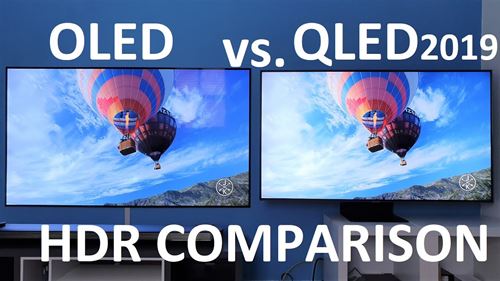
     The IHS Markit analysis firm has just published a report that almost pushes the doors open: Qled televisions are more sold than Oled models. This is forgetting that Oled production is limited and that all the tiles are sold out.


     IHS Markit has just published a study announcing that Qled televisions sold better than their Oled counterparts during the 2019 financial year. 

     Samsung and its partners, who also offer Qled TVs (TCL, Hisense and soon OnePlus), are expected to sell around 5.45 million Qled TVs in 2019, while Oled TV manufacturers (LG, Sony, Panasonic, Philips, and others) are expected to sell only 3 million units by the end of the year.


The firm has obviously been caught in the game of Samsung who wants us to directly oppose the Qled technology to the Oled

     The IHS Markit report overlooks the fact that the limitation in sales of Oled TV sets is not due to price or technology but to the limited production capacity of LG Display. 

     Until recently, the South Korean company had only one production plant for Oled 8.5 generation panels, located in Paju. This plant can produce approximately 2.9 million Oled tiles per year. 

     However, since the end of August LG Display has opened a second factory in China. Based in Guangzhou, this plant - also of the 8.5 generation, but using a new optimized cutting method (MMG) - should double production by 2020, and thus probably double sales of Oled TVs.

     The second problematic point is that IHS Markit pits two technologies against each other that are not really competing. It should be remembered that Qled TVs are LCD TVs using a quantum box filter, as do many other manufacturers without using the term Qled (for Quantum-Dot LED). 

OLED-QLED

    This is the case of Sony with its Triluminos process, or Philips with its Quantum Dot 4K LED TVs. As such, IHS Markit should have included all TVs equipped with a quantum box filter in sales. 

     The firm has obviously been caught in Samsung's game of pitting Qled technology directly against Oled, whereas Oled TVs are quite apart on the market.


     Finally, one might also think that the success of Qled TVs is due to their more affordable prices than those of Oled TVs, but this is not often the case with the recommended retail prices. 


     Here again, Samsung's strategy is well established and the South Korean manufacturer does not want to display a label too low so as not to devalue its technology against the Oled. 


     The advertised prices are therefore often equivalent to those of the Oled models, but Samsung is making up for this with interesting promotions. The latest one concerns the Samsung QE55Q85R, an excellent LCD TV that was sold at only €1,500 during the French Days instead of the €2,000 usually asked for.


     But a 55-inch Oled TV like the Panasonic 55FZ800, which sold for less than €1,300, is still more interesting. 

     On the other hand, the most affordable Qled TV, the Samsung QE65Q60R, is certainly much cheaper than an Oled TV, but it doesn't deliver performances worthy of the Samsung Qled name. And in fact, it doesn't do much better than a Samsung UE55RU7405.

     There's a war on the high-end TV segment composed mainly of Oled models, a few LCD models (Samsung Q85R, Samsung Q90R, Sony XF9005, Sony XG9505) and a few 8K models (Samsung Q900R, Samsung Q950R, Sony 85ZG9, and LG 88Z9), but there's no Qled vs Oled war!

Wednesday, 8 January 2020

LG OLED TVs range 8k tvs

LG presents its new Oled TVs range

LG-8K-signature

     Like every year, LG takes advantage of the CES to unveil its new range of Oled TVs and in 2020, we can say that the Korean manufacturer has packed the package with no less than 14 different models.


     The CX series is the successor to the C9 range, while the BX series takes over from the B9 TVs. The same applies to the wallpaper TV LG 65WX which succeeds in the LG 65W9 and retains a remote soundbar. 

     The roll-up TV LG 65R9 - which is still not available - has already been replaced by the LG 65RX. The LG Oled 8K TV - the LG 88Z9 we tested - is also replaced by the LG 88ZX. 

It also inherits a little brother, the LG 77ZX, which is the first 77-inch Oled 8K TV. It remains to be seen whether it will be cheaper than the LG 88Z8, which sold for €30,000.


     All these TVs keep a design very close to last year's models and only differ from them by the integration of the new LG Alpha 9 Gen3 AI processor, which should further improve the quality of the scaling and the performance of the motion compensation engine.

     A more "affordable" 77-inch Oled 8K television with smaller pixels

     The first 77-inch Oled 8K TV - the LG 77ZX - takes the features of the 88Z9, but inherits the new Alpha 9 Gen 3 AI processor. 

     This model should above all make the Oled 8K TVs a little more democratic, so to speak. The 88-inch model should still be sold at around €30,000, but the 77-inch model should be sold between €15,000 and €20,000. 

     Above all, it shows that LG Display has managed to reduce the distance between each pixel even further by managing to fit 132 million sub-pixels on a 77-inch panel (4 sub-pixels for the 33 million pixels of an 8K display), which is clearly a feat.


LG-Oled-Flat

The new Oled GX TV that sticks to the wall

     LG is well aware that wall-mounted Oled TVs - with the exception of the W series - lack class, especially when compared to Samsung TVs. 

     Because of the thickness of the screen is very thin, once hung on the wall, an Oled TV suffers from the thickness of the lower part that lifts the slab from the wall by several centimeters. 

     The LG Oled GX television responds to this problem by distributing the electronics evenly behind the tile so that the entire television can be placed against the wall in the same way as Samsung offers on its top-of-the-range series, The Frame and Qled.

     Unlike Samsung, LG does not use an external case. Connections and power supply are embedded in the TV. This is a good and bad thing at the same time. 

     The installation will be a little more complicated for the general public since it will be necessary to dig your head in to make the HDMI cables and power supply disappear, but in some situations, this avoids having an external box in addition. 

     As a result of the integration of all the components, the TV has a uniform thickness of 20mm, which is more than that of the new Samsung QE65Q950TS with its 15mm thickness.


LG-Oled-G-Sync

A 48-inch model in the CX range

     If the characteristics of the 2020 Oled TVs are close to those of 2019 with just the arrival of a new processor, the big news is the arrival of a 48-inch model. 

     The LG 48CX will thus display an Ultra HD image on a diagonal of 48 inches (about 122 cm) and will retain the same technical characteristics as its big brothers equipped with 55, 65 and 77-inch tiles.


     The big unknown with this model is the price. LG does not yet communicate on the prices of this model which should be available in the second half of 2020. 

     Usually, the 55-inch version of the C-series at LG is sold at around €3,000. One can logically expect a retail price of around €2,500 for the launch of the LG 48CX. This price should of course drop over time.

FilmMaker Mode, Bluetooth surround speakers, G-Sync, built-in microphone, and Dolby Vision IQ

     All new Oled TVs will benefit from a new FilmMaker mode, a standardized cinema mode that is expected to be adopted by several manufacturers to make life easier for users. 

     Above all, this model benefits from an automatic switchover with compatible sources such as Dolby Vision for example. 

     LG has also announced the compatibility of its televisions with the new Dolby Vision IQ mode which - as far as we understand it - adjusts the picture according to the ambient light conditions measured by a sensor on the television. The aim is to deliver a faithful picture, even in broad daylight.

     In another very practical development, LG announces that it will now be possible to add any Bluetooth speaker to manage the rear channels of Dolby Digital movies. A great way to increase immersion in a movie at a lower cost. 

     Another much-awaited addition is that the GX, WX, ZX and RX TVs now include a microphone directly on the TV so that you can control the TV by voice without having to touch the remote control in the same way that Sony already offers on its Oled AF9 and AG9 TVs.


     Finally, 12 of the 15 models will also be G-Sync compatible, which means no tearing and jerking, and support for 4K 120Hz 4:2:0:0 8-bit 4:2:0 support on current graphics cards that are HDMI 2.0-compliant. 

     To enjoy a full sampled image, you'll have to wait for the release of the new Nvidia graphics processors which should finally support HDMI 2.1. LG also announces a display delay reduced to approximately 5 ms which will be - according to them - impossible to measure with the usual tools.

Ultra HD, OLED, Dolby, HDR... Decipher TV Datasheets Like A Pro


lg-oled-wall

Find all the CES 2020 news on News Tech

An outing for spring 2020

     As every year, these new Oled televisions should be available next spring, with the exception of the 48-inch model which will arrive later this year. LG may also choose to postpone the release of the LG BX, as it did last year, to avoid cannibalizing sales of the C series.
